Sunday, 29 January 2012


Friday, 27 January 2012
Locations in which we will film
We need only two locations to film:
Outdoors, near a phone booth:

Somewhere that could potentially resemble a headquarters of a large, global company (A18):

Outdoors, near a phone booth:

Somewhere that could potentially resemble a headquarters of a large, global company (A18):

Analysis of past students' work
"The Night Walker"
The ident is unique and memorable, as well as the music played with the ident. The film opens with a close up of hands, and the diegetic music is combined with this image effectively, so as to intrigue the audience, whilst at the ame time letting them know that something sinister is about.
The way the credits are laid out (the font, plus how they shake) also add to the audience's feeling that something sinister is afoot.
The music is effectively used, as it gets more tense as the chase scene starts.
The lighting effect (backlighting) used to introduce the person who gives chase to the woman is effective in making the chaser look intimidating.
Mise en scene used effectively to present an enigma to the audience: "Why are there pictures of people with their eyes crossed out?"and, "Why does the person at the beginning have a bleeding hand"?
Thursday, 26 January 2012
Thriller music
After much consideration, we have finally selected the music track(s) we are going to use in the thriller! We have selected multiple tracks (there are only certain parts of the song we want), here is one of them:


We are still waiting on a reply

Planning of titles
Media Studies (OCR)
AS Coursework G321
Robert Clack 12127
Candidate names and numbers
Ident
A Film by Group 76
Main actor(s)
Other actors
Music by
Editing by
Director of photography
Costume designer
Director
'The Search Engine'
Treatment sheet
Film name:
The Search Engine
Plot outline:
The Search Engine
Plot outline:
An intelligent, unsuspecting worker stumbles upon sensitive information on a memory stick. In a short amount of time he finds himself with what seems to be two different organisations hot on his tail, who will stop at nothing to get the information back - but who can he trust?
Resources needed (props, actors, settings):
- Phone booth
- Three actors (Henchman, Owen, Mr. G)
- Yellow pages book
- Antagonist's headquarters
Justification of ideas in relation to the genre:
Our idea for a film involves thriller conventions involving: suspense, a resourceful hero, an antagonist who is initially more powerful, and the inability to simply go to the authorities (as no one can be trusted)
Planning the thriller - Consideration of target audience
When making a thriller, it is important to acknowledge who the thriller will be aimed at, and to make changes (or not) based on that acknowledgement. It should be considered that most moviegoers nowadays are in between the ages of 16 and 25. Things may also appeal differently to different genders.
Also, when designing characters (especially the protagonist), it should be considered whether the audience will be able to relate to the protagonist. Audiences may also be drawn by the presence of certain stars in a movie.
This led to us generating this questionnaire to aid in research concerning the thriller industry:
http://www.surveymonkey.com/s/LPVQQ65
Also, when designing characters (especially the protagonist), it should be considered whether the audience will be able to relate to the protagonist. Audiences may also be drawn by the presence of certain stars in a movie.
This led to us generating this questionnaire to aid in research concerning the thriller industry:
http://www.surveymonkey.com/s/LPVQQ65
Wednesday, 25 January 2012
Thriller Planning - Script
The Search Engine
(Owen walks fast to the phone booth, visibly stressed.
Owen enters phone booth and attempts to make a phone call, but it doesn't work)
Owen: [Microphpone is needed here, but must remain out of the camera's view] Come on, work! (forcefully puts down the phone, brushes his hand through his hair, then rips a page out of the phone book).
(Camera zooms out to show point of view shot from Henchman 1's view; he is on the phone, in a car, talking to Mr G, his superior)
Mr G: [Microphone is also needed here]The Hendermann deal is going through. It's too much of a liability to keep him alive. Get rid of him. No evidence.
Henchman 1: [Microphone must catch the hesitation] (hesitation) Yes, sir
(End of call, Henchman 1 exits car)
Owen: (exits phone booth)
(Henchman 1 pretends to be a passer by and walks in Owen's direction)
Owen: Have you got a phone? I need to make an important call
[Shot/reverse shot]
[Shot/reverse shot]
Henchman 1: (appearing to look in his coat pocket, then punches Owen)
[Screen fades to black; text: 24 hours earlier...]
Wednesday, 18 January 2012
Film Openings - Zodiac
Zodiac is a film about a serial killer who was never caught (it is based on a true story). The film starts by showing us the murder of two innocents on the 4th of July (Independence Day in America)

Conventions used in this opening sequence are the anonymous killer, and the death of innocents. An establishing shot in the beginning conveys to the audience that the night during which the scene is set is a happy occasion (the mise en scene showed fireworks, and diegetic sound also enabled the audience to hear fireworks). However non diegetic music is lacking in music that is of a light mood, which implies something sinister could be about to happen. The use of shot/reverse shot is used to maintain a smooth flow in conversation.
Conventions used in this opening sequence are the anonymous killer, and the death of innocents. An establishing shot in the beginning conveys to the audience that the night during which the scene is set is a happy occasion (the mise en scene showed fireworks, and diegetic sound also enabled the audience to hear fireworks). However non diegetic music is lacking in music that is of a light mood, which implies something sinister could be about to happen. The use of shot/reverse shot is used to maintain a smooth flow in conversation.
Film Openings - Brick
Another film opening we analysed was Brick, a film which centres on a detective story. The title refers to a block of heroin, squeezed in such a way that it's size and shape resembled that of a brick's:
There was one main convention in the film opening: the dead body. The camera angles are also mostly close up shots. This meant that the audience didn't get to see who the dead person was (although the high heels imply it was a girl). However the audience did manage to see someone watching over the dead body, which brings questions to mind such as "Why is he just watching?" and, "How did this happen?".
There were few edits, (so shots were quite long) which allowed the audience absorb the scene and perhaps encourage them to look for clues (to no avail). The non diegetic sound was slow, gloomy music, to match what was happening on screen (a dead body being shown). Then later, mise en scene showed lockers, like what would be seen in a school, and the diegetic sound was that of a bell ringing and the sound of many schoolchildren, which implies that many of the characters involved in the story are all relatively young.
There was one main convention in the film opening: the dead body. The camera angles are also mostly close up shots. This meant that the audience didn't get to see who the dead person was (although the high heels imply it was a girl). However the audience did manage to see someone watching over the dead body, which brings questions to mind such as "Why is he just watching?" and, "How did this happen?".
There were few edits, (so shots were quite long) which allowed the audience absorb the scene and perhaps encourage them to look for clues (to no avail). The non diegetic sound was slow, gloomy music, to match what was happening on screen (a dead body being shown). Then later, mise en scene showed lockers, like what would be seen in a school, and the diegetic sound was that of a bell ringing and the sound of many schoolchildren, which implies that many of the characters involved in the story are all relatively young.
Film Openings - Memento
We analysed three different film openings in class. We looked at how each film opening utilizes the following: typical conventions of a thriller, types of shots made with the camera, how it was edited, any sound, and the mise-en-scene.
The first film we looked at was Memento, a film about a man with anterograde amnesia - a condition which prevents him from forming new memories - and how he finds his wife's killer. The film is shot in an unusual way as the scenes are shown back to front (the end scene is shown first, then the previous scene, and vice versa).
Conventions used were the enigmatic photo which showed a dead man, the blood, and the gun used to shoot the dead man.
There are many close ups in this section: it helps convey the protagonists' emotion as well as helping the audience empathize with the protagonist in terms of his constant confusion.
Editing was done in the first few seconds of the film so as to show the passage of time going backwards. This hooked the audience, and also reflects on the protagonists' confusion. There was also a portion of the film which was filmed in black and white, so as to signify a flashback.
The aspects of mise en scene were blood and the photos. The blood implied violence and the photos helped the audience realise what was Leonard had to do in order to get as far as he has in the search for his wife's killer.
Sabotage
Sabotage is a film of Hitchcock's. An unnamed agent manipulates his wife's younger brother to deliver a package for him, to arrive at 13:45 (it is a bomb, and only the agent knows it). Hitchcock uses consistent references to time (close ups to clocks), close ups to the bomb, and the use of music -which resembles a 'tick tock' sound, to create tension. The audience are placed in suspense as they are left wondering whether the young boy will save himself from the bomb or not.
Monday, 16 January 2012
Film Language - Mise en scene
Mise en scene is French for, "placing on stage". It refers to five key things:

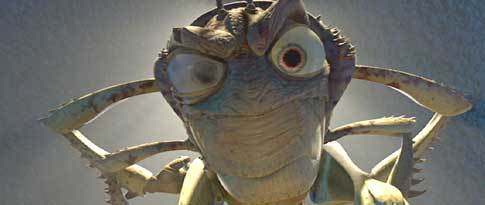
- Settings and props - these help establish the atmosphere and can be an indication of where and when the scene is set (in a science fiction film you will tend to see things that resemble futuristic items, whilst in a film set in the middle ages, you will tend to see old fashioned clothes)
- Costumes, hair/makeup - these help convey the characters' personalities, and stereotypes are often used to help the audience understand who is who from the very beginning (although this can be turned on it's head, if the film maker wants to purposely mislead the audience) - for example, a villain is typically made to look scarier than the protagonist
- Acting (facial expressions, body language) - facial expressions and body language emphasise the mood of the current scene, e.g. in a scary scene in a horror film the characters will tend to have a fearful expression on their face, in contrast to a scene set in a serious business deal, where the characters will have more straight, serious faces
- Lighting - lighting has a range of uses and can be used to make a character look more intimidating/scary, more appealing, or to give an air of mystery.
- Positioning of characters in the frame - how the characters are positioned can be an indication of who is in power, and who is important, etc. It can also show characters that are hiding and aware of the action, although not directly taking part in it.
Film Language - Sound

Sound in film can take two forms: diegetic or non-diegetic.
Diegetic sound is sound which the characters in the story can hear, as well as the audience. This will usually consist of things such as conversation, and the other noises which come about due to the action of the characters. There may also be music playing in the background which the characters can hear as well as the audience (e.g. if they are listening to music on the radio).
Non diegetic sound is sound that can only be heard by the audience (the characters in the world of the film cannot hear it). This usually involves things such as background music used to set the atmosphere. To a certain extent, it also includes the voice of a narrator (if there is one).
Sunday, 15 January 2012
Continuity editing
Editing is an important process of film making. Continuity editing is a style of editing which links edits together in a way that makes it clear to the audience that the edits are part of the same scene, and gives the impression of a flowing story. There are several techniques that contribute to good continuity editing:
Match on action
Match on action is when an action carried out in one shot is seen being carried out in exactly the same way in the next shot. An example of this is one person being filmed entering a door, opening it with their right hand, then the shot cuts to the door being opened from another angle, with them using the same hand and having the same posture, etc.
Sound bridges
This is when sound from one shot carries on to another. For example, conversation in one shot being carried on in the next edit.
The following video shows examples of match on action and sound bridges:
Match on action
Match on action is when an action carried out in one shot is seen being carried out in exactly the same way in the next shot. An example of this is one person being filmed entering a door, opening it with their right hand, then the shot cuts to the door being opened from another angle, with them using the same hand and having the same posture, etc.
Sound bridges
This is when sound from one shot carries on to another. For example, conversation in one shot being carried on in the next edit.
The following video shows examples of match on action and sound bridges:
Thriller opening scene/s
Thrillers usually follow a certain structure.
In the beginning, the scene is set. Normality is presented, along with a character who is isolated and vulnerable. A point of view shot is sometimes used - it helps add to the thriller element, as we are subject to only noticing things that the character can, creating an element of mystery. Discordant non diegetic music may also be introduced, so as to introduce the concept that all is not right, and leads the viewer to anticipate what will happen. This state of anticipation may be held by the protagonist as well, which helps the audience identify with the character.
In the beginning, the scene is set. Normality is presented, along with a character who is isolated and vulnerable. A point of view shot is sometimes used - it helps add to the thriller element, as we are subject to only noticing things that the character can, creating an element of mystery. Discordant non diegetic music may also be introduced, so as to introduce the concept that all is not right, and leads the viewer to anticipate what will happen. This state of anticipation may be held by the protagonist as well, which helps the audience identify with the character.
Definition - suspense/shock
Suspense
Suspense (in the context of a story being told) refers to the heightened state of uncertainty that the audience feels due to the story - sometimes referred to as 'being on the edge of the seat'. Suspense can be built up using a variety of ways such as the music and the speed of editing. A common scene where suspense is generated in thrillers is when the helpless victim is trying to escape from the dangerous attacker(s):
Shock
Shock (in the context of a story being told) refers to the feeling of surprise that the audience feel due to the discovery of something unexpected. Shock usually follows the discovery of an unexpected twist in the story - such as in Psycho, where the person we initially think to be the main character dies halfway through film.
Suspense (in the context of a story being told) refers to the heightened state of uncertainty that the audience feels due to the story - sometimes referred to as 'being on the edge of the seat'. Suspense can be built up using a variety of ways such as the music and the speed of editing. A common scene where suspense is generated in thrillers is when the helpless victim is trying to escape from the dangerous attacker(s):
Shock
Shock (in the context of a story being told) refers to the feeling of surprise that the audience feel due to the discovery of something unexpected. Shock usually follows the discovery of an unexpected twist in the story - such as in Psycho, where the person we initially think to be the main character dies halfway through film.
Saturday, 14 January 2012
Film Language - Editing
Editing involves taking shots of what has been filmed and arranging them in a way that conveys what the film maker wants to convey.
Editing is frequently used to set the pace of the scene - few edits in a scene usually mean that things are happening very slowly and could be used to signify boredom or sorrow. In contrast fast editing is used frequently in fight scenes to emphasise the fast pace.
There are different methods of editing:
Editing is frequently used to set the pace of the scene - few edits in a scene usually mean that things are happening very slowly and could be used to signify boredom or sorrow. In contrast fast editing is used frequently in fight scenes to emphasise the fast pace.
There are different methods of editing:
- The straight cut - this involves immediately moving from one shot to the next, nothing complex is done
- The wipe cut - this is when one shot 'pushes' or 'covers' the current shot aside
- The jump cut - this is when the shots are edited in such a way that the audience feel as if they've skipped part of the action. This can have a variety of effects such as conveying humour, sorrow, or boredom, depending on the context.
- The fade out - this is when the screen fades to black, and is an edit usually implemented after a lot of built up tension has finished, due to events being resolved.
- The dissolve - this is when one image slowly fades out into another, this can be used for foreshadowing, especially if it makes a graphic match (e.g. a skull dissolving to show a close up of someone's eye)
Preliminary Task Review
After looking at our preliminary task, our group noted down positives and negatives about it, to help improve our filming techniques for when we create our thriller.
We found three positives which were: good use of eyeline match (Dale looking at the card), adhering to the 180 degree rule, and effective use of the 'dissolve' effect during editing.
However, we failed to consider continuity whilst filming - in one scene, Max is shown opening a door with his right hand, but the next edit shows him opening it with his left. Another flaw was the lack of a clear storyline - most people who watched our thriller did not understand what was going on until it was explained to them. Finally, we also lacked enough shot/reverse shot techniques.
These are factors we will have to bear in mind during the filming of our thriller
We found three positives which were: good use of eyeline match (Dale looking at the card), adhering to the 180 degree rule, and effective use of the 'dissolve' effect during editing.
However, we failed to consider continuity whilst filming - in one scene, Max is shown opening a door with his right hand, but the next edit shows him opening it with his left. Another flaw was the lack of a clear storyline - most people who watched our thriller did not understand what was going on until it was explained to them. Finally, we also lacked enough shot/reverse shot techniques.
These are factors we will have to bear in mind during the filming of our thriller
The MacGuffin/Maguffin/McGuffin
The MacGuffin/Maguffin/McGuffin (it can be referred to as either one of those) is the thing that drives a story's plot. The MacGuffin tends to be something that the main characters in the story desire to obtain, and will do whatever they can to do so. The MacGuffin may vary from story to story, and some examples can be money, love, and power; sometimes the MacGuffin won't be fully revealed and will be open to what the audience's interpretation of it is.

The MacGuffin is prominent in all films, especially thrillers. Usually, the MacGuffin is centred on during the first few scenes, with the audience's interest in it decreasing as the film goes on. It may be reintroduced at the end of the story (just to patch things up), although in some cases the MacGuffin is completely forgotten by the end.
Hitchcock defined the MacGuffin as, "The object around which the plot revolves. But as to what that object specifically is, the audience don't care".
There can be more than multiple MacGuffins in every story, and they sometimes referred to as 'plot coupons'.
The MacGuffin is prominent in all films, especially thrillers. Usually, the MacGuffin is centred on during the first few scenes, with the audience's interest in it decreasing as the film goes on. It may be reintroduced at the end of the story (just to patch things up), although in some cases the MacGuffin is completely forgotten by the end.
Hitchcock defined the MacGuffin as, "The object around which the plot revolves. But as to what that object specifically is, the audience don't care".
There can be more than multiple MacGuffins in every story, and they sometimes referred to as 'plot coupons'.
The complete and final version of the preliminary task:
After finishing the last edits we have finally produced this:
Audience research - Analysis
The results from the questionnaire we made using survey monkey have shown certain patterns. We found that most people had a tendency to fear spiders and death or murder. Psychological thrillers were also shown to be a favouite over other types of thrillers, with conspiracy thrillers coming in second.
However, we may not have enough time to get across to the audience the main ideas of the film, and to let them know what type of thriller we have - this is because we only have approximately two minutes of footage to make.
Since psychological and conspiracy thrillers were most popular, we have decided to make one of those two thriller types.
However, we may not have enough time to get across to the audience the main ideas of the film, and to let them know what type of thriller we have - this is because we only have approximately two minutes of footage to make.
Since psychological and conspiracy thrillers were most popular, we have decided to make one of those two thriller types.
Audience research - methods of research
For doing research on our audience we have several methods available to us: http://www.surveymonkey.com/ (a website that can make questionnaires), Facebook (a social networking site, which can be used to distribute a questionnaire), and focus groups (talking to a few people at a time face-to-face and asking them the necessary questions.
Friday, 13 January 2012
Film Language - Camera
There are a range of camera techniques that are used in films to give different effects.
Camera techniques involving movement are:
Camera techniques involving movement are:
- Panning shot - when the camera moves from left to right (or right to left) on a fixed axis, usually used to give a view of the environment
- Tilt shot - when the camera moves from up to down (or down to up) on a fixed axis, usually used to examine something specific (e.g. a person, a car)
- Crane shot - when the camera moves at a distance above ground level (on a crane, hence the name), usually used to give a view of a large area, or to achieve certain effects such as making a certain character look vulnerable
- Tracking shot - when the camera is placed on a set of tracks, usually used if fast action is needed to be followed (e,g. a car chase)
- Rolling shot - when the camera is rotated so as to tilt what the audience can see, usually done from a point of view shot to signify intoxication or disorientation
- Steadicam - Not so much of a camera technique, but more of a piece of camera equipment. The Steadicam is designed in such a way that it is attached to the camera man/woman in such a way that they can do things such as run, and despite this the shot will appear to be still. This is useful in situations where it isn't feasible to place tracks, and a chase scene is desired (e.g. if the chase scene takes place on snowy terrain).
Camera techniques involving distance are:
- Extreme long shot/Establishing shot - this shot is taken from very far away, and is usually used to set the scene
- Long shot - this shot is usually used to display a whole person, or a large object
- Medium shot - this shot is usually used to display the top half of a person
- Close up - this shot is usually used to display the whole face, to make visible the character's emotions at that particular time
- Extreme close up - this shot usually focuses on a specific part of the face, such as the eyes or mouth, and can be used to mean many different things, depending on the context.
Cause and effect plotting

Tuesday, 10 January 2012
Possible thriller plot ideas
We had several ideas for the plot of our thriller:
- A seemingly innocent protagonist on the run from a hit man, who will stop at nothing to kill him
- A large global company whose sinister plots are stumbled upon by an unsuspecting worker
- A man discovers that his whole life is just 'deep cover', and he is actually a dormant assassin, who will be turned 'active', at which point he will lose all control of his life
- A father is framed for a crime he didn't commit, whilst his family are kidnapped by the villains, and he goes on a long journey to wreak vengeance on the villains, who escaped untouched due to a loophole in the system.
Alfred Hitchcock
Alfred Hitchcock was a renowned film director, who specialized in the thriller genre. He was born in 1899 in Leytonstone. As a child, he was introverted and had many fears. His father had once locked him into a police cell for the night as punishment: this affected his attitudes towards police; even in his adult years, he refused to drive for fear that a policeman would pull him over for speeding. His career spanned from the 1920s, to 1976 and in this period he made 52 films. He initally worked in Britain, until 1939 when he was offered a contract in Hollywood.

Alfred Hitchcock was known as a master of suspense, and his films were the 'benchmark' for psychological thrillers.
"Under the strong influence of Alfred Hitchcock, thrillers often begin with a crime and the accusation of an innocent bystander. Where the accused should contact the authorities, no doubt the case could be promptly solved, but instead the poor bystander runs from the law thus jeopardizing life and limb."
- Rick Altman
 This is shown in Hitchcock's film Saboteur, where the protagonist is framed for starting a fire in an airplane plant during WW2 (where his friend is killed in an attempt to stopped the fire), and goes on the run whilst attempting to search for the real culprit.
Alfred Hitchcock quotes:
"There is no terror in the bang, only in the anticipation of it."
"If it's a good movie, the sound could go off and the audience would still have a perfectly clear idea of what's going on."
"Always make the audience suffer as much as possible."
Hitchcock would often make a short appearance in his films; this helped his own efforts get recognised by the pulic, as previously, people would go and see a film for it's leading actors - and not for the director. His success had gone beyond just making thrillers, and in the 1950s, he started his own TV show: "Alfred Hitchcock Presents".
Hitchcocks' most successful film was Psycho - which he created in the 1960s.
"Under the strong influence of Alfred Hitchcock, thrillers often begin with a crime and the accusation of an innocent bystander. Where the accused should contact the authorities, no doubt the case could be promptly solved, but instead the poor bystander runs from the law thus jeopardizing life and limb."
- Rick Altman
This is shown in Hitchcock's film Saboteur, where the protagonist is framed for starting a fire in an airplane plant during WW2 (where his friend is killed in an attempt to stopped the fire), and goes on the run whilst attempting to search for the real culprit.Alfred Hitchcock quotes:
"There is no terror in the bang, only in the anticipation of it."
"If it's a good movie, the sound could go off and the audience would still have a perfectly clear idea of what's going on."
"Always make the audience suffer as much as possible."
Sunday, 8 January 2012
Features/rules that compose a thriller (conventions):
Most people would agree that a thriller will generally have the following characteristics:
- High tech gadgets
- A resourceful protagonist
- An initially more powerful, better equipped antagonist
- A double agent (also known as a 'False hero')
- Suspense
- A MacGuffin
- Fast paced action scenes
Saturday, 7 January 2012
Chuck Jones & "The Rules" (for Road Runner)
Do films follow a set of rules?
There are film makes who will say that "there are no rules", or that, "rules are there to be broken".
"When you enjoy something, you must never let logic get too much in the way. Like all the villains in all the James Bond movies. Whenever Bond breaks into the complex, 'Ah, Mr. Bond, welcome, come in, let me show you my entire evil plan and then put you in a death machine that doesn't work.'"
- Jerry Seinfeld
However, many would say that there is a certain similarity that mainstream films possess for the general public to deem them worthy of viewing.
An example of a set of rules being given to a show is the cartoon Road Runner:
To help it appeal to the audience, the cartoon series was given the following rules:
There are film makes who will say that "there are no rules", or that, "rules are there to be broken".
"When you enjoy something, you must never let logic get too much in the way. Like all the villains in all the James Bond movies. Whenever Bond breaks into the complex, 'Ah, Mr. Bond, welcome, come in, let me show you my entire evil plan and then put you in a death machine that doesn't work.'"
- Jerry Seinfeld
However, many would say that there is a certain similarity that mainstream films possess for the general public to deem them worthy of viewing.
An example of a set of rules being given to a show is the cartoon Road Runner:
To help it appeal to the audience, the cartoon series was given the following rules:
- The Road Runner cannot harm or upset the Coyote except by going, "Meep Meep!"
- No outside force can harm the Coyote; he is only to be harmed by his own ineptitude or the failure of ACME products.
- The Coyote could stop at anytime if he wasn't a fanatic.
- No dialogue, besides, "Meep Meep!"
- The Road Runner must stay on the road - otherwise, logically, he would not be called a Road Runner.
- All action must be confined to the natural environment of the two characters - the South West American Desert
- All materials, tools, weapons, or mechanical devices must have been obtained from ACME (and that should be made obvious to the audience)
- The Coyote is always suffers more from humiliation of his failures, rather than physical harm from them.
Different types of thrillers
The thriller genre is hard to define due to the fact that it covers a lot of films. Examples of different types of thrillers are:
- spy (e.g. James Bond films)
- political (e.g. The Manchurian Candidate)
- conspiracy (e.g. The Bank Job)
- legal (The Pelican Brief)
- psychological (e.g. Psycho)
Thursday, 5 January 2012
Cliffhangers
A cliffhanger is a part of the film where a character's status is at a critical moment - it could turn out to be either very good or very bad. Cliffhangers create suspense and puts the audience on the edge of their seat as they want to know what will happen to the character (it may even be a case of life and death).
A good example of a cliffhanger is in The Italian Job (although it should be noted that not all cliffhangers involve hanging off cliffs):
A good example of a cliffhanger is in The Italian Job (although it should be noted that not all cliffhangers involve hanging off cliffs):
Tuesday, 3 January 2012
Enigmas
An enigma is something mysterious to hook the audience. They are usually introduced at the beginning of a thriller to intrigue the audience. An example of this is in the film source code, where a man is forced to relive 8 minutes of someone else's life on a train destined to explode (although the audience nor he know it yet):
Red herrings
Subscribe to:
Comments (Atom)